



Urban landscape and the dishinabitation in Japanese cinema
21
%
813 Kč 1 023 Kč
Sleva až 70% u třetiny knih
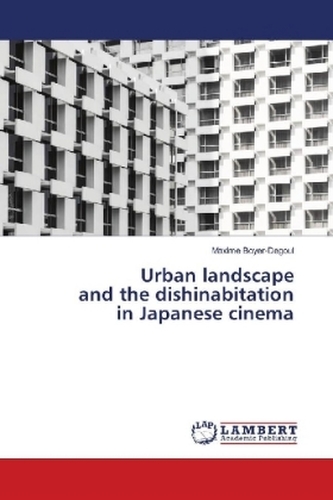
For a long time, Ozu's movies have been praised as the typical representation of Japanese culture such as Zen or Buddhism. However, this point of view which strongly echoes the roots of Western documentary genre linked to travelling and exoticism is highly limited and avoid the nature of the media of representation itself: cinema. Cinema is a language. It translates a subjective vision of an author influenced by the objective reality he frames. In the postwar Japan and the increasing modernization, this picturesque Japan was strongly questioned by intellectuals and artists very concerned by the loss of Japanese identity at the favor of the underside of Western modernity such as consumerism. Periods of trouble like the 1960s' rebuilding of the country or the 1990s' lost decade even more accentuated the urges of Japanese filmmakers to question Japanese identity, to question images through images, to use images in order to unravel what lies beneath them. From a selection of Japanese filmmakers's works, this essay aims to analyze one aspect of this Japanese identity questionning through images: disinhabitation.
| Autor: | Boyer-Degoul, Maxime |
| Nakladatel: | LAP Lambert Academic Publishing |
| Rok vydání: | 2018 |
| Jazyk : | Angličtina |
| Vazba: | Paperback / softback |
| Počet stran: | 64 |
Mohlo by se vám také líbit..
-
Rhys's Wide Sargasso Sea as a Hy...
Herischian, Nazila
-

Contemporary Issues in Strategic Mana...
Hossain, Dewan Mahboob
-

Assessment of the United Nations'...
-

Sport Retirement: The Experiences of ...
Valel, Rachelle
-

New generic top-level domain names an...
Sedig, Anna
-

Tino Sehgal
Brand, Jessica van den
-

Parametric Design Thinking
Chokhachian, Ata
-

Energy Security and Sustainable Devel...
Farah, Hosh
-

Plyometrics and Power Training Program
Jha, Santu Kumar
-

Environmental Governance and Diplomacy
Khadka, Ram