



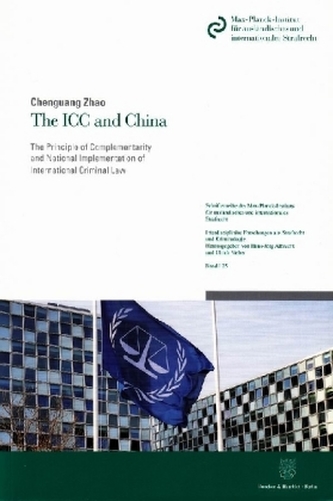
The ICC and China
5
%
837 Kč 884 Kč
Sleva až 70% u třetiny knih
A disconnection has historically existed between international and domestic justice. In China, international justice and domestic justice were long treated as two autonomous yet interconnected systems, akin to the concept of Yin and Yang. With the establishment of the International Criminal Court (ICC) in 2002, the two systems began to increasingly work in tandem. The principle of complementarity is one of the cornerstones of the ICC's architecture, according to which states have primary jurisdiction over the ICC. So long as the legal system of a state can efficiently investigate and prosecute the core international crimes prohibited in the Rome Statute, the ICC will not intervene. However, if a state is unwilling or unable to investigate and prosecute these crimes, the ICC will invoke the principle of complementarity to step in. Thus, the principle of complementarity has an impact on the national implementation of international criminal law, as well as on its exercise of jurisdiction in many aspects, including for third party states. As a third party state to the ICC, China has ratified a number of international conventions, including those on genocide and torture; China is therefore obliged to prosecute these international crimes by implementing these international conventions into national law. However, the core crimes have thus far not been incorporated into Chinese criminal law. This research work focuses on the possible impact of the principle of complementarity on the implementation of international criminal law in China as a third party state and the future prospects of the relationship between China and the ICC based on this analysis. By so doing, it aims to contribute to the discourse on complementarity for both scholars and practitioners.
| Autor: | Zhao, Chenguang |
| Nakladatel: | Duncker & Humblot |
| Rok vydání: | 2017 |
| Jazyk : | Angličtina |
| Vazba: | Paperback / softback |
| Počet stran: | 245 |
Mohlo by se vám také líbit..
-

Der Begriff des Politischen
Schmitt, Carl
-
Politische Romantik
Schmitt, Carl
-

Der Behemoth
Bredekamp, Horst
-
Volksentscheid und Volksbegehren
Schmitt, Carl
-
Legalität und Legitimität
Schmitt, Carl
-

Englands deutsches Königshaus
Feuchtwanger, Edgar
-

Die allgemeine Theorie der Beschäftig...
Keynes, John Maynard
-

Fünf plus Zwei
Scheil, Stefan
-
Die Legende von der Erledigung jeder ...
Schmitt, Carl
-

Transatlantische Wechselwirkungen
Scheil, Stefan
-

Theorie der wirtschaftlichen Entwicklung
Schumpeter, Joseph A.
-
Theorie des Partisanen
Schmitt, Carl
-
Die Moral des Glücks
Nasher, Jack
-
Verfassungslehre
Schmitt, Carl
-
Der Begriff des Politischen.
Schmitt, Carl
-
Die geistesgeschichtliche Lage des he...
Carl Schmitt